By UbongAbasi Ise
“A patriot must always be ready to defend his country against his government.” — Edward Abbey
The mood of Nigerians at the country’s 65th Independence Anniversary suggested that a lot of citizens had since given up on Nigeria. The reason for celebration became vague and ethereal. Pages of newspapers and social media posts prove that there is nothing to celebrate about Nigeria when every space is abuzz with stories of various shades of insecurity, decayed infrastructure, brazen corruption, spiraling unemployment, cruel hardship, and the abuse of people’s fundamental human rights.
After Sixty-five years, the question is not just how our leaders have failed us, but how we, the followers, have failed Nigeria.
For a great length of recorded time, there is an unceasing belief that Nigeria’s leadership is the mainspring of all the palavers rocking the country. Surprisingly, no serious comment has been passed against the followers who have massively failed in their role to track the nation’s administrative progress. The average follower is aloof today, preoccupied by social media memes and trends, and doesn’t even know what is going on in the so-called public offices.
To start with, could one believe that the vast majority of Nigerians today don’t know the names of their local government chairmen, including the councilors representing their wards?
Most young people don’t know the names of their senators and Federal House of Representatives’ members, including the state legislators representing their constituencies. If this is doubted, anyone could confirm with a few Nigerians around them.
Again, one may also be shocked to have realized that majority of Nigerians, especially young women, don’t know who the country’s vice president is, and may not still know the identity of their respective deputy governors. This is a profound civic knowledge deficit which in turn creates an accountability vacuum within the democratic contract.
But how can citizens challenge these leaders who are supposedly responsible for the nation’s constant failures and mismanagement when they literally don’t know who they are, and what their jobs are?
The blame-shifting rhetoric against leadership is both distracting and vexing. We blame leaders for failing in their duties because they have a face, and we ignore the ordinary citizens who are not playing their followership roles because they are faceless. We neglect the core fact that governance is a transaction between the leadership and the followership just as in business, where there is no buyer without a seller. As it stands, none of the two functions actually works on its own.
You cannot demand accountability from a leader regarding facts you have no idea about. The vast majority of Nigerians treat governmental affairs as solely the business of politicians, which is precisely why fundamental, high-impact financial questions are rarely asked. One must wonder what percentage of Nigerians actually inquire about the Internally Generated Revenues (IGR) realized annually, the volume and dollar rate of crude oil sales, the amount of Naira saved following petroleum subsidy removal, or the statutory allocations disbursed to each state and Local Government Area. Even more critical is the lack of public inquiry into the conception and implementation of Zonal Intervention Projects (ZIP) otherwise known as constituency projects. Ultimately, if the majority of citizens, including civil organizations, labor unions, traditional institutions, and individuals, do not consistently raise these specific questions, there will be no sustained accountability pressure to compel Nigerian leaders to change.
Insecurity is today’s alarming concern in Nigeria. Security should be the duty of everyone because what is befalling an individual or community today may be the turn of another tomorrow. Recently, Nigerians are aware of the armed raiding of Chekungi community in Edu Local Government Area of Kwara State. The question is: have Nigerian civil society organizations, youth groups, traditional rulers, and other organized groups of concerned Nigerians prevailed on the Senator representing Kwara North Senatorial District, Senator Sadiq Suleiman Umar, and the House of Representatives member representing Edu/Moro/Patigi Federal Constituency, Ahmed Adam Saba, to move motions to summon security chiefs to appear before the National Assembly to explain their operational failures in their constituency or recommend the sack or sanction of security chiefs superintending over failure? No, everyone goes about their normal business; after all, these incidents are not happening to them.
This template of legislative pressure induced by the Nigerian masses, if it had been consistently applied following earlier major incidents like the Yelwata killings in Benue State, the attacks across Bokkos and Mangu areas in Plateau State, or the coordinated killing of Muslim worshippers in Unguwan Mantau community in Malumfashi Local Government Area, might have significantly abated future occurrences, as the increased scrutiny might have compelled security chiefs to up their games.
After sixty-five years of Nigeria’s independence, it becomes tense for anyone traveling on Nigeria’s highways for fear of kidnappers and bandits. There are always high chances of abduction for those plying the Abuja-Kaduna Highway, Akure-Akoko Road, Birnin Gwari-Funtua Road, Benin-Auchi Road, and the like, as the criminals take advantage of the deplorable state of the roads.
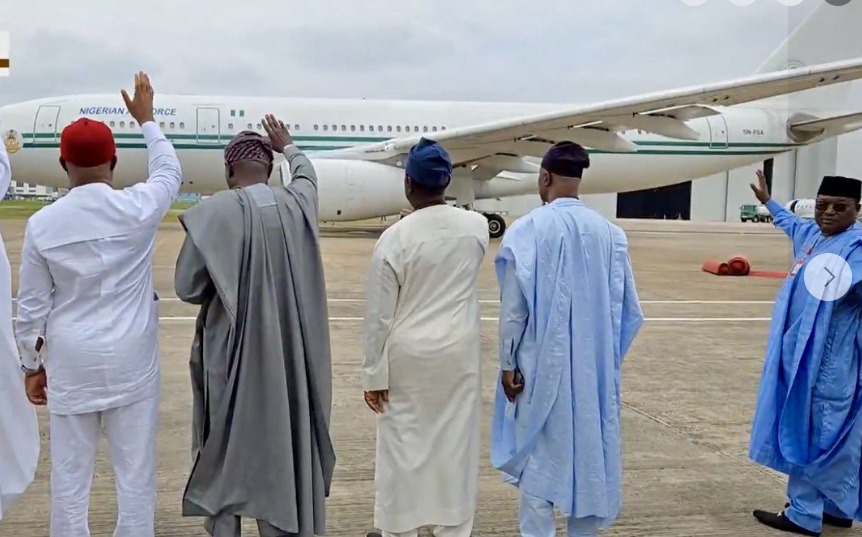
Perhaps some leaders may not be aware of how bad road problems are until the affected stakeholders bring them to their attention in a way they cannot ignore. These political leaders who take flights to any destination may not be able to ignore the deteriorating state of the Sagamu-Ore-Benin Highway, Minna-Lambata-Suleja Road, Calabar-Itu-Uyo Highway, Enugu-Onitsha Expressway, and so on without the Nigerian masses drawing the attention by picketing the airports that these leaders use to bypass these bad roads.
When the followers do not know who their leaders are, and how to approach them for accountability, it becomes clear that those who represent them in the government would mismanage the power bestowed upon them. As noted by Frederick Douglass in 1857, “Power concedes nothing without a demand. It never did and it never will.” This means that order or change is instituted by a demand for accountability, not granted by goodwill because the political authorities and institutions are generally comfortable with the status quo and they have no inherent motivation to change a system that benefits them.