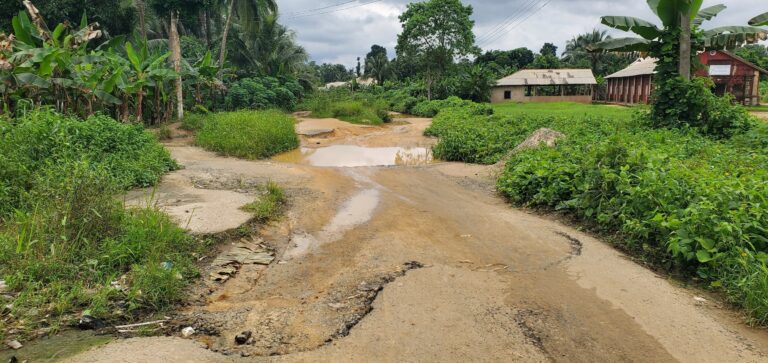
A major transport route for Nigeria, the Odukpani-Calabar highway, has severely degenerated, creating a crippling transport crisis and turning the route into a “death trap.” The road, which is part of the larger Calabar-Itu-Uyo network, is a key gateway for the haulage of petroleum products, construction materials, and food produce from northern Nigeria to the South-South and South-East regions.
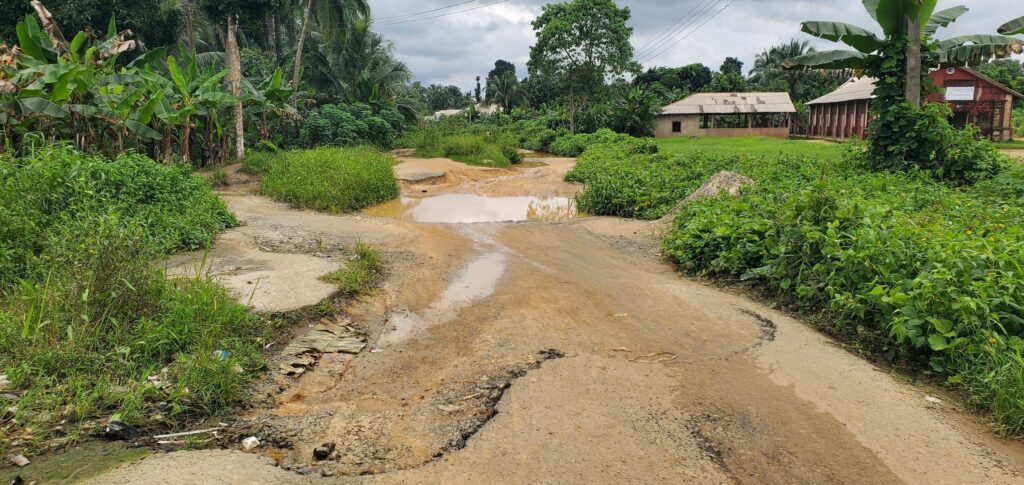
The highway’s deplorable condition is characterized by massive potholes, eroded sections, and collapsed portions, which impede all forms of movement.
The most critical point of the failure lies in the Okrikang section of this Federal Highway, which has become the epicenter of the transport crisis.
The road’s severely deteriorated state leads to daily gridlock, primarily caused by fallen and broken-down heavy-duty trucks. The situation is particularly dire around the Okrikang Junction, where the compromised road surface frequently causes heavy articulated vehicles, including tankers and haulage trucks, to tip over or break down, effectively blocking the flow of commerce and traffic.
Residents of Uruk Ata Ikot Ebo in Etim Ekpo local government area of Akwa Ibom State are voicing profound frustration over the delayed and reportedly abandoned construction of a vital rural road, a project overseen by the Federal Co-operative College, Oji River (Project Code: ERGP20246867).
According to Tracka, a civic technology instrument designed to track and monitor government projects in Nigeria, the road, officially titled “CONSTRUCTION OF URUK ATA IKOT EBO CONNECTING RURAL ROAD,” was allocated N499,000,000, with ₦144,460,500.00 already disbursed to the contractor, Kenvic Moore Biz Ventures Nig Ltd, as of last month. Despite the “ONGOING” official status, an assessment conducted on June 12, 2025, revealed that the project has been effectively abandoned for months.
Anonymous sources informed Tracka that work had actually commenced briefly in November 2024 but was abruptly halted in the same month. Since the stoppage, the contractor and their team have completely vacated the site with no indication of a return.
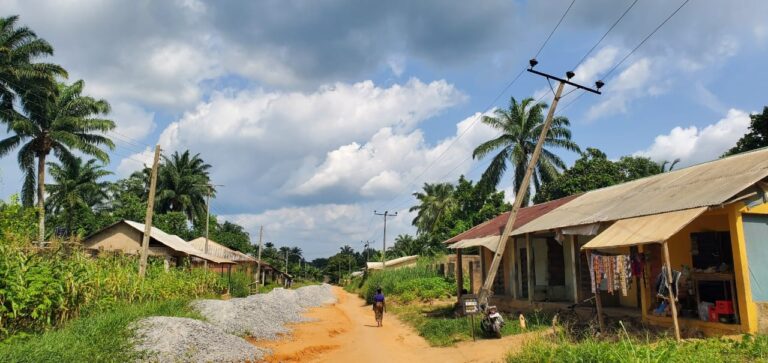
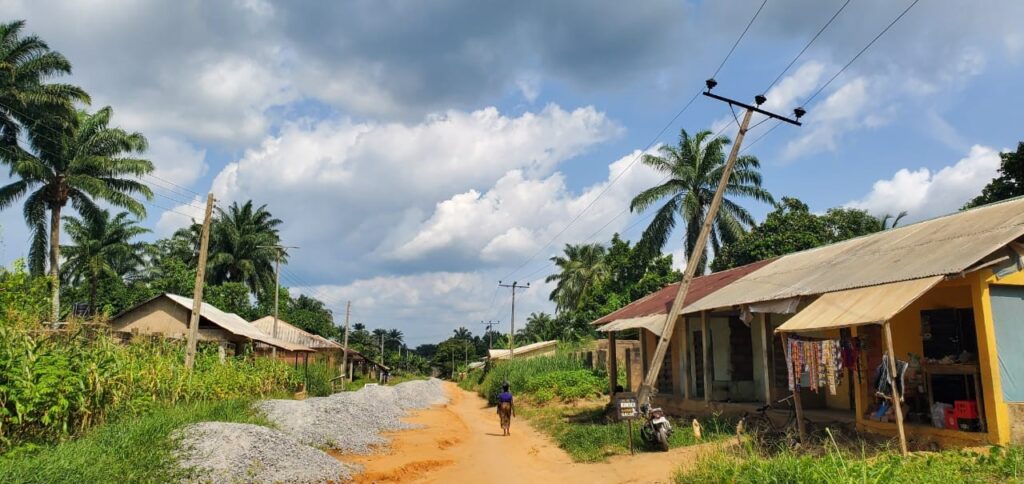
At the project site, the only visible evidence of activity was large piles of unused gravel and a stretch of road that had been graded and covered only with laterite. Critically, no drainage system has been installed to manage rainwater run-off. Due to the absence of gutters, heavy rains have continually washed away the laterite, resulting in persistent and severe flooding across the area. Residents report that their movement is frequently restricted, and their homes are being adversely affected by the constant inundation, fueling their deep dissatisfaction with the handling of the critical infrastructure project.
A road construction project aimed at improving connectivity in Abak Local Government Area has been stalled for nearly a year, leaving residents in a worse state than before and facing severe flooding due to poorly executed drainage works.
The project, titled Construction of Ediene Obong Road (Project Code: ERGP20247152), according to Tracka, was allocated a substantial N400 million under the purview of the Federal Co-operative College, Ibadan. The contract was awarded to Fortera Nigeria Ltd. and it is still at the ongoing phase.
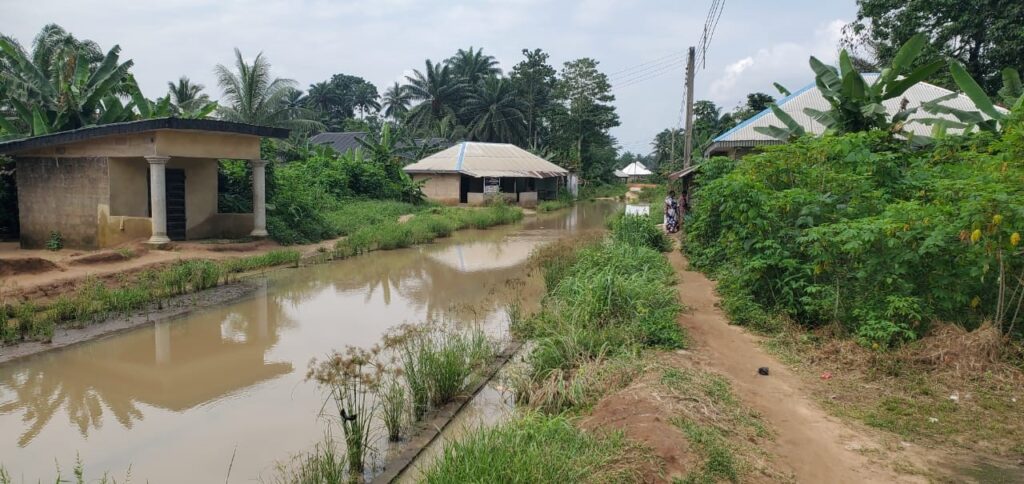
Local residents, whose identities are protected by Tracka, revealed that the work commenced between April and May 2024 but came to a complete halt by October 2024. As at the time of filing this report there appear to be no sign suggesting a planned return by the contractor. The only remnants of the multi-million naira effort are “mounds of sand and a stagnant pool of water that breeds mosquitoes,” according to locals who preferred anonymity.
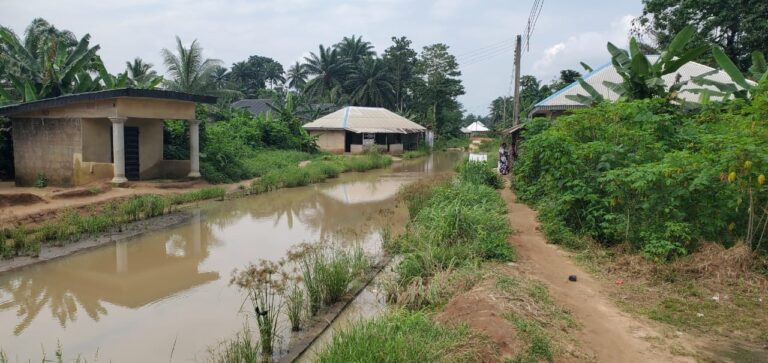
The community’s distress centers on the critical failure of the new infrastructure. The drainage system constructed on both sides of the road was described by a resident as “poorly built” and “not properly designed to channel water.”
“The current condition of the road is worse than it was in the past,” lamented one resident. “We are suffering losses due to the floods caused by the badly constructed drainage, which forces us to evacuate our homes whenever it rains.”
Despite receiving full funding in the 2024 Federal Government Budget, a N5 million erosion control project intended for Afia Nsit Urua Nko in Akwa Ibom remains completely neglected and unexecuted. The non-implementation has severely compounded the daily struggles of residents, leading to widespread flooding and inaccessibility during the rainy season.
The project, designated “Erosion Control at Afia Nsit Urua Nko, Nsit Ibom LGA” and identified under budget code ERGP20244121, was intended to alleviate the environmental damage caused by heavy rainfall and safeguard local infrastructure.
A budget tracking platform, Tracka, which monitors the implementation of government projects, confirmed the zero-level execution status of the project. Its field reports indicate that no work has commenced on the site, raising serious questions about the utilization of the N5 million allocation.
The failure to execute the erosion control work has effectively trapped the community in a worsening cycle of infrastructural decay and economic disruption, preventing residents from accessing markets and schools during peak rains.
The National Biosafety Management Agency (NBMA), which operates under the Twitter handle @BiosafetyNig, has been identified as the Implementing Agency for this budget line item.
The dire state of Isawo Road, which connects Owutu to Agric in the Ikorodu area of Lagos State, has become a source of profound frustration and hardship for thousands of commuters. Despite being a crucial artery, the less than 10-kilometer road project has been under construction for over eight years, yet it remains fundamentally incomplete and difficult to ply.
Yearly budget allocations, purportedly dedicated to the road’s completion, appear to have yielded little result, leaving residents to grapple with the perennial challenges of commuting. The situation has recently deteriorated following persistent heavy rainfall.
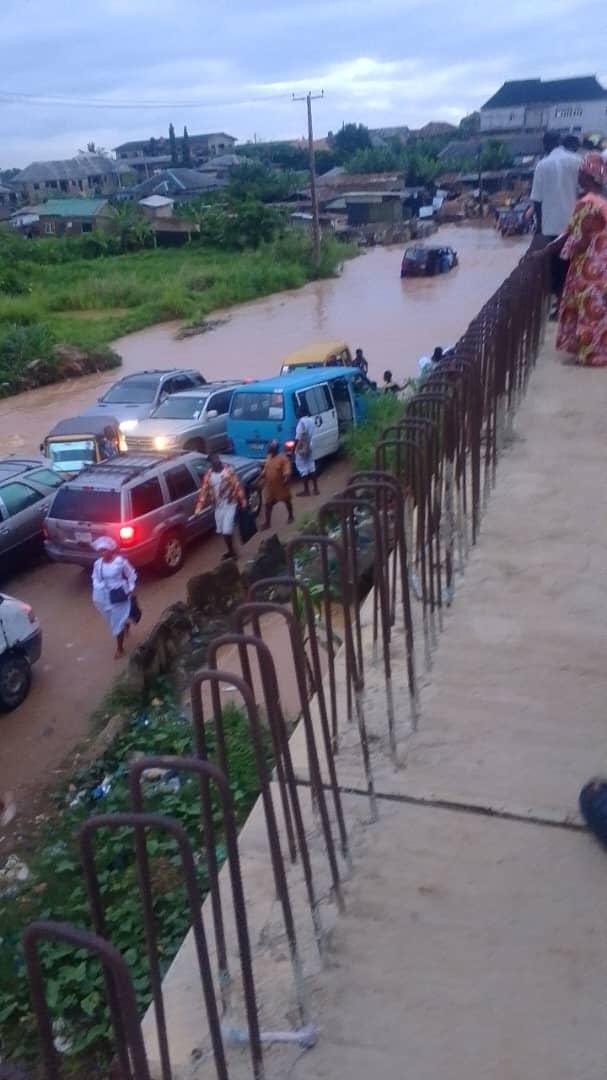
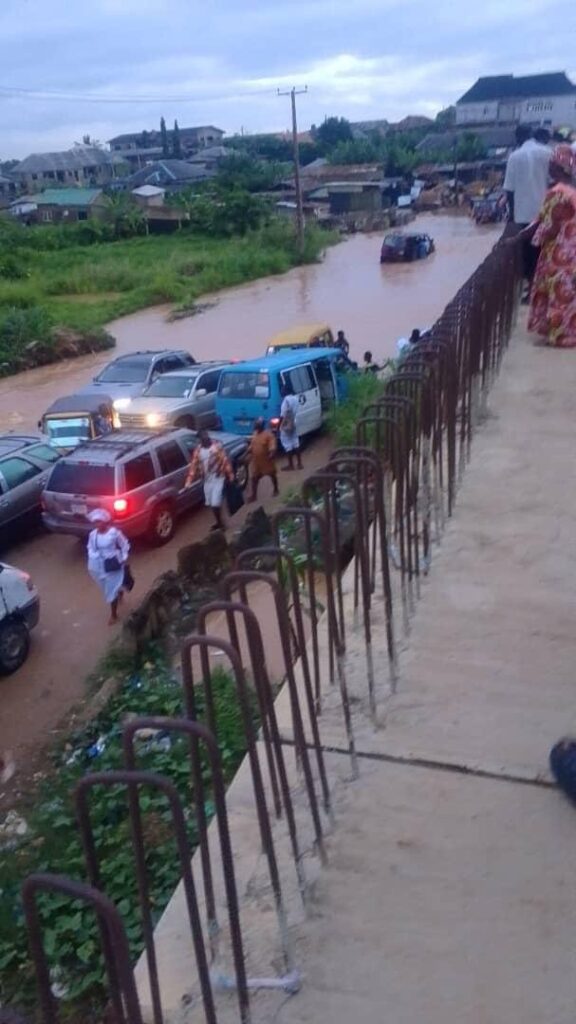
Motorists and residents report that the road is now virtually unusable, turning sections into muddy quagmires where vehicles frequently get stuck in deep potholes. The only functional alternative—a partially completed bridge—is now overwhelmed, leading to agonizingly long queues and significant delays for those trying to navigate the area.
Concerned residents are now making a passionate appeal to the Lagos State Government (@followlasg) and relevant public works agencies to intervene immediately. They urge the government to investigate the persistent delays and ensure the project is prioritized for rapid completion, bringing an end to nearly a decade of infrastructural neglect and commuter suffering.
“A patriot must always be ready to defend his country against his government.” — Edward Abbey
The mood of Nigerians at the country’s 65th Independence Anniversary suggested that a lot of citizens had since given up on Nigeria. The reason for celebration became vague and ethereal. Pages of newspapers and social media posts prove that there is nothing to celebrate about Nigeria when every space is abuzz with stories of various shades of insecurity, decayed infrastructure, brazen corruption, spiraling unemployment, cruel hardship, and the abuse of people’s fundamental human rights.
After Sixty-five years, the question is not just how our leaders have failed us, but how we, the followers, have failed Nigeria.
For a great length of recorded time, there is an unceasing belief that Nigeria’s leadership is the mainspring of all the palavers rocking the country. Surprisingly, no serious comment has been passed against the followers who have massively failed in their role to track the nation’s administrative progress. The average follower is aloof today, preoccupied by social media memes and trends, and doesn’t even know what is going on in the so-called public offices.
To start with, could one believe that the vast majority of Nigerians today don’t know the names of their local government chairmen, including the councilors representing their wards?
Most young people don’t know the names of their senators and Federal House of Representatives’ members, including the state legislators representing their constituencies. If this is doubted, anyone could confirm with a few Nigerians around them.
Again, one may also be shocked to have realized that majority of Nigerians, especially young women, don’t know who the country’s vice president is, and may not still know the identity of their respective deputy governors. This is a profound civic knowledge deficit which in turn creates an accountability vacuum within the democratic contract.
But how can citizens challenge these leaders who are supposedly responsible for the nation’s constant failures and mismanagement when they literally don’t know who they are, and what their jobs are?
The blame-shifting rhetoric against leadership is both distracting and vexing. We blame leaders for failing in their duties because they have a face, and we ignore the ordinary citizens who are not playing their followership roles because they are faceless. We neglect the core fact that governance is a transaction between the leadership and the followership just as in business, where there is no buyer without a seller. As it stands, none of the two functions actually works on its own.
You cannot demand accountability from a leader regarding facts you have no idea about. The vast majority of Nigerians treat governmental affairs as solely the business of politicians, which is precisely why fundamental, high-impact financial questions are rarely asked. One must wonder what percentage of Nigerians actually inquire about the Internally Generated Revenues (IGR) realized annually, the volume and dollar rate of crude oil sales, the amount of Naira saved following petroleum subsidy removal, or the statutory allocations disbursed to each state and Local Government Area. Even more critical is the lack of public inquiry into the conception and implementation of Zonal Intervention Projects (ZIP) otherwise known as constituency projects. Ultimately, if the majority of citizens, including civil organizations, labor unions, traditional institutions, and individuals, do not consistently raise these specific questions, there will be no sustained accountability pressure to compel Nigerian leaders to change.
Insecurity is today’s alarming concern in Nigeria. Security should be the duty of everyone because what is befalling an individual or community today may be the turn of another tomorrow. Recently, Nigerians are aware of the armed raiding of Chekungi community in Edu Local Government Area of Kwara State. The question is: have Nigerian civil society organizations, youth groups, traditional rulers, and other organized groups of concerned Nigerians prevailed on the Senator representing Kwara North Senatorial District, Senator Sadiq Suleiman Umar, and the House of Representatives member representing Edu/Moro/Patigi Federal Constituency, Ahmed Adam Saba, to move motions to summon security chiefs to appear before the National Assembly to explain their operational failures in their constituency or recommend the sack or sanction of security chiefs superintending over failure? No, everyone goes about their normal business; after all, these incidents are not happening to them.
This template of legislative pressure induced by the Nigerian masses, if it had been consistently applied following earlier major incidents like the Yelwata killings in Benue State, the attacks across Bokkos and Mangu areas in Plateau State, or the coordinated killing of Muslim worshippers in Unguwan Mantau community in Malumfashi Local Government Area, might have significantly abated future occurrences, as the increased scrutiny might have compelled security chiefs to up their games.
After sixty-five years of Nigeria’s independence, it becomes tense for anyone traveling on Nigeria’s highways for fear of kidnappers and bandits. There are always high chances of abduction for those plying the Abuja-Kaduna Highway, Akure-Akoko Road, Birnin Gwari-Funtua Road, Benin-Auchi Road, and the like, as the criminals take advantage of the deplorable state of the roads.
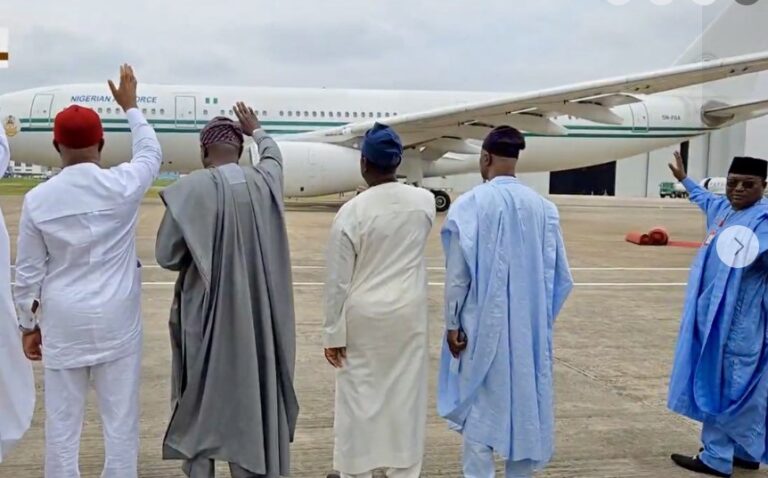
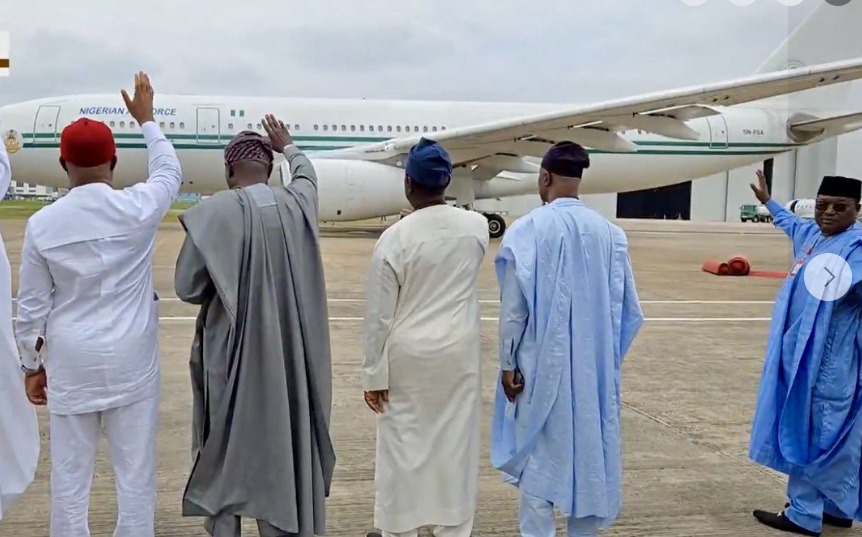
Perhaps some leaders may not be aware of how bad road problems are until the affected stakeholders bring them to their attention in a way they cannot ignore. These political leaders who take flights to any destination may not be able to ignore the deteriorating state of the Sagamu-Ore-Benin Highway, Minna-Lambata-Suleja Road, Calabar-Itu-Uyo Highway, Enugu-Onitsha Expressway, and so on without the Nigerian masses drawing the attention by picketing the airports that these leaders use to bypass these bad roads.
When the followers do not know who their leaders are, and how to approach them for accountability, it becomes clear that those who represent them in the government would mismanage the power bestowed upon them. As noted by Frederick Douglass in 1857, “Power concedes nothing without a demand. It never did and it never will.” This means that order or change is instituted by a demand for accountability, not granted by goodwill because the political authorities and institutions are generally comfortable with the status quo and they have no inherent motivation to change a system that benefits them.
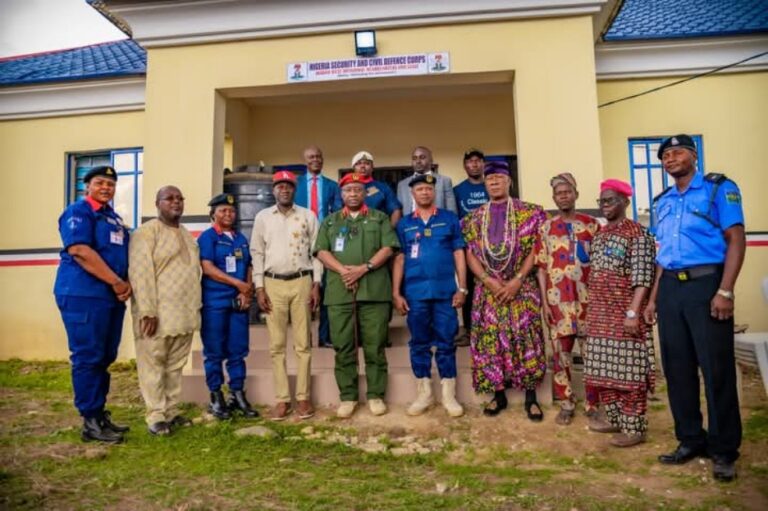
The Commandant General of the Nigeria Security and Civil Defence Corps (NSCDC), Professor Ahmed Abubakar Audi, has rained praises on Oyo State Command for its commitment to grassroots security, describing it as a model for effective community partnership. The commendation was made in a press statement signed by CSC Babawale Afolabi, the Director of Public Relations at the NSCDC National Headquarters in Abuja.
The commendation follows a recent community engagement event hosted by the NSCDC’s Ibadan West Division, where traditional rulers, artisans, and various local security groups came together to donate furniture, ICT tools, and operational equipment. This collaborative effort is seen by the NSCDC as a significant boost to the division’s operational capacity and public trust.
According to the statement, Prof. Audi singled out both the State Commandant, CC Augustine Padonu, and the Divisional Officer, SC Sakirat Adekojo Abdulrasheed, for their visionary leadership. He noted that their people-centered approach has made the command a prime example of how security agencies can work hand-in-hand with the public to safeguard lives and property.
“Security at the grassroots is the bedrock of national peace,” Prof. Audi said, adding that the NSCDC will continue to deepen these partnerships to “defend the defenseless and protect critical assets.” The statement concluded that this initiative aligns with the Federal Government’s Renewed Hope Agenda and is a clear example of the positive results of placing visionary officers in key positions.
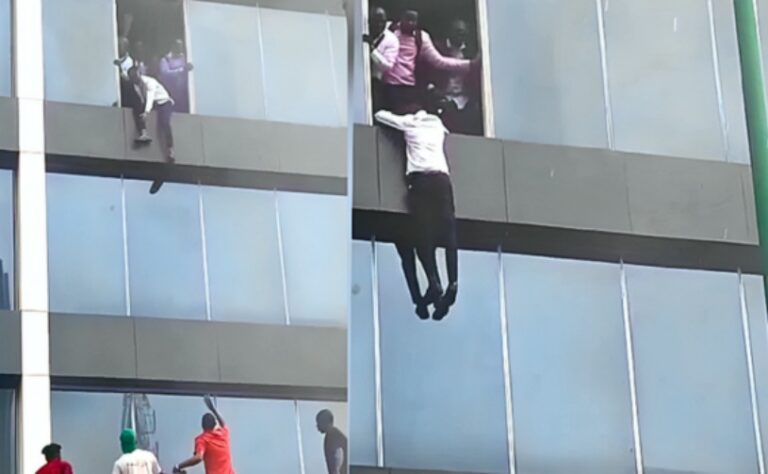
The Federal Fire Service has announced a nationwide fire safety compliance audit of public and private buildings, following a fatal inferno at Afriland Tower on Lagos Island. The audit is a direct response to Tuesday’s fire, which has now claimed at least 10 lives.
The latest casualty count was confirmed Thursday, with six additional deaths reported. These victims were employees of United Capital, a financial and investment services firm that occupied the 3rd and 4th floors of the six-storey commercial building. The confirmation came just hours after the Federal Inland Revenue Service (FIRS) disclosed that four of its staff members also died in the incident.
The upcoming audit aims to enforce stricter fire safety measures and prevent similar tragedies in the future.
A new U.S. visa fee could create a significant financial barrier for foreign professionals seeking to work in the United States.
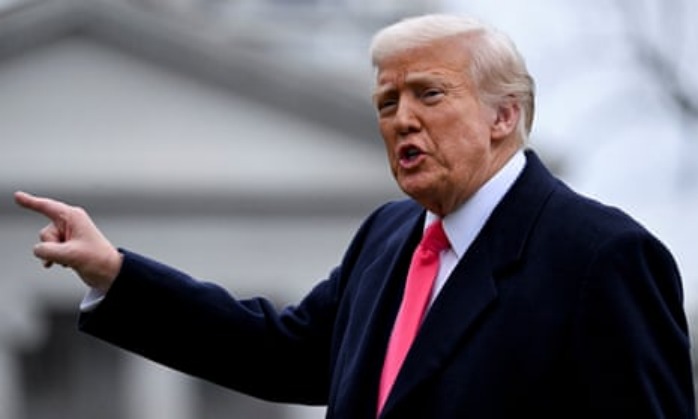
In a move to curb immigration, President Donald Trump signed a proclamation on Friday that raises the application fee for the H-1B visa to a staggering $100,000. The change adds a new financial hurdle for companies, affecting workers from foreign countries, including those from Nigeria.
The H-1B visa is a vital pathway for skilled workers, particularly those in the tech sector, to pursue career opportunities in the U.S. This new fee, which comes on top of existing visa costs, makes it financially prohibitive for all but the largest corporations to hire international talent.
Speaking at the event, President Trump stated, “We need workers, we need great workers, and this pretty much ensures that that’s going to happen.” Commerce Secretary Howard Lutnick added that the new charge is intended to push firms to prioritize American workers with emphasis to “Stop bringing in people to take our jobs.”
The change could significantly deter skilled professionals from Nigeria and other nations from entering the U.S. labor market. This shift may compel many to explore career opportunities in other countries with more open visa policies, such as Canada or the United Kingdom.
The proclamation also directs Labour Secretary Lori Chavez-DeRemer to begin a rulemaking process to revise prevailing wage levels for the H-1B program, a change that could further complicate the hiring of foreign workers.
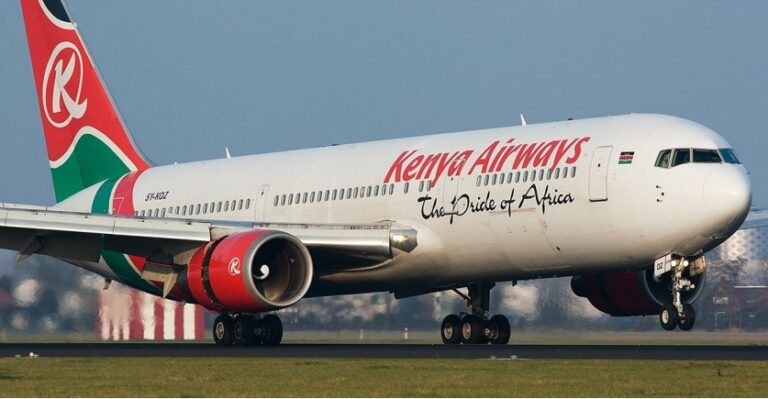
Following a high-profile case involving Nigerian traveler, Gloria Omisore. Kenya Airways has paid a sanction fee to the Nigerian Civil Aviation Authority, NCAA, for violating passenger rights. The airline made the payment Wednesday following a series of meetings with Nigerian and Kenyan officials.
The fine was confirmed by Michael Achimugu, Director of Public Affairs and Consumer Protection at the NCAA, in a post on his official X account. Achimugu noted that while the payment has been made, it does not conclude the matter, as the initial timeframe for resolving the issues has already passed.
The sanction, as it would be recalled, stems from a public dispute in February, when Nigerian passenger Gloria Omisore accused Kenya Airways of mishandling her during a disrupted trip. Omisore was reportedly denied boarding on a connecting flight from Nairobi to Paris due to a missing Schengen transit visa, a requirement she claimed the airline had previously assured her was not necessary.
According the reports, the situation led to about a 17-hour layover, which was said to have been extended by a 10-hour delay for an alternative route. In what appeared to be a long wait, Omisore’s request for accommodation was denied by the airline, which argued that its policies do not cover visa-related denied boardings. A heated confrontation ensued, which was captured on video, where Omisore allegedly threw used sanitary pads at airline staff.
Following an investigation, the NCAA found Kenya Airways culpable, blaming the airline for breaching consumer protection regulations and misleading the public. On May 7, 2025, the aviation authority sanctioned the airline, ordering it to compensate three affected passengers, including Omisore, with 1,000 Special Drawing Rights each and issue a public apology.
The NCAA stressed that these sanctions are not punitive but are designed to strengthen airlines’ compliance with safety and passenger-handling standards. The aviation body stated it will continue to enforce regulations to ensure all airlines operating in Nigeria adhere to international aviation standards and protect passenger rights.